
The Worst Passover
This year, the Jewish celebration of liberation from oppression, respect for the plight of refugees and commitment to peace felt hollow and incoherent due to Israel’s wars in Iran and Lebanon

For my entire life, I have believed that the Jewish festival of Passover provided a beautiful and universally appealing celebration of escape from oppression and the possibility of freedom, renewal, and peace. But at this year’s Passover, every piece of the story lionizing the Israelites’ harrowing journey from slavery to freedom, felt alien and dissonant, impossible to reconcile with the war, death, displacement, and human suffering being caused by Israel throughout the Middle East. I always thought that people from almost any background could find inspiration in the closing line of the ceremony “next year in Jerusalem, next year may we all be free,”—the idea that this city laden with meaning and history for three of the world’s great religions could be a universal symbol for peace and human liberty. This year, those words felt like a cruel joke.
I say this as one who is hardly a pacifist or unaware of the security threats that have surrounded Israel for its 78-year history. It is unfortunate but necessary that Israel had to build a fierce, capable military force to defend itself from the hostile Arab states that launched three full-throated wars to eliminate Israel in the first 25 years of its existence. Even as the threat from Arab nation-states receded, Israel has also had no choice but to use force against non-state actors both willing and able to carry out violent attacks against Israelis by infiltrating suicide bombers into Israel’s cities, shooting deadly rockets across its borders, or inspiring popular violent uprisings. I have absolutely no problem with Israel’s policy that terrorists who have Israeli blood on their hands or whose life work is to plan and plot to kill innocent Israelis are legitimate targets for lethal violence, no matter where they rest their heads. And while Iran presents a more remote threat than Hamas, Hezbollah, and other violent extremists in Gaza and the West Bank, a state formed as the safe haven for the victims of the Holocaust has every right to take seriously the threat by Iran’s leaders to use the most advanced weapons known to mankind to “wipe Israel off the map.”
But while the very idea of Zionism recognizes that a Jewish state is entitled to use force to defend its interests and deter enemies, Jewish values simultaneously require that force and violence be used only when absolutely necessary, and that when it is used, it must minimize harm to innocent civilians. Considering the impact of warfare on civilians is not only a fundamental obligation of international law, but is also dictated by Jewish history, as we Jews know far too well the pain and horror of those who are cast out of their homes, expelled forcefully from their lands, and put in jeopardy due to scarcity of water, food, and medicine. Indeed, the plight of those fleeing violence and oppression is at the heart of the Passover story and Jews are instructed to keep this experience in mind as they conduct their affairs: “You shall not oppress a stranger, for you know the feelings of the stranger, having yourselves been strangers in the land of Egypt” (Exodus 23:9).
It was difficult to listen to the Passover story this week without noticing the divergence between the ancient Israelites striving for justice against the cruel Pharaoh and the violence that has been undertaken by Israel in Iran and Lebanon this month. The tables seem completely turned. Today, it feels to me as if Israel has become far too enamored with asserting military power, has lost perspective on when it is appropriate to use force, and has far too easily ignored the moral requirement to minimize harm to civilians.
Let’s start with the war in Iran.
The current aerial bombardment of Iran is a war of choice that Israel has been eager to launch against the Islamic Republic for almost two decades. Far from seeing war as a last resort to protect its vital security interests, Israel has constantly campaigned for a war of aggression against Iran while also actively undermining diplomatic efforts by the United States and the international community to mitigate the threats from Iran peacefully. The end result of this campaign is the so far ineffective and highly destructive war we are witnessing today.
This effort began in 2008 when George W. Bush denied Israel’s request for the U.S. to bless an Israeli airstrike on Iran’s nuclear facilities. In a fit of pique, three weeks after Bush’s veto of the attack plans, Israel conducted a massive air exercise covering distances equivalent to reaching Iran’s Natanz facility. Commenting on the exercise, Israel’s deputy prime minister dismissed the possibility that Bush’s economic sanctions could work to restrain Iran, stating that “There will be no alternative but to attack Iran in order to stop the Iranian nuclear program.”
This trend of undermining diplomatic efforts to curb Iranian threats continued when Barack Obama chose to open a diplomatic dialogue with Iran on its nuclear program. Israeli Prime Minister Benjamin Netanyahu was so incensed that, despite the many billions the United States provides Israel annually in military aid, he openly challenged the policy direction of the American president, flooding American airwaves with claims that Obama was making a bad deal with Iran and then directly lobbying Congress to reject Obama’s nuclear deal. Netanyahu lost this battle in 2016 when the agreement, which became known as the JCPOA, was unanimously approved by the United Nations Security Council, barring Iran from moving towards a nuclear weapon for 15 years.
Even though by every account the JCPOA effectively prevented Iran from gaining a nuclear capability, Netanyahu continued his assault on it once Donald Trump became president. Indeed, Netanyahu boasted that his advocacy was ultimately responsible for Trump withdrawing the United States from the JCPOA in 2018. Predictably (and just as Netanyahu wanted) Iran resumed its enrichment activities and refused to engage in further negotiations with the first Trump and Biden administrations, resulting in Iran holding large stocks of highly enriched uranium and moving precariously close to the nuclear threshold when Trump took the oath of office a second time in 2025.
Even then, Trump was keen on pressuring Iran into a revised nuclear deal. But again, Netanyahu was determined to push the malleable Trump towards large-scale war against Iran. Five rounds of U.S.-Iran negotiations took place in April and May 2025, with a sixth scheduled for June 15. But on June 13, Israel preempted the negotiations by launching its 12-day air war targeting Iranian nuclear facilities, military leaders, and officials affiliated with the nuclear program. Trump had clearly given a green light to these attacks, but also made efforts to claim “the U.S. had nothing to do with” the Israeli attacks, presumably to keep the possibility of a negotiated settlement open. After the U.S. joined Israel’s air war and dropped giant bombs on Iran’s key underground nuclear sites, Netanyahu had to overcome Trump’s conviction that the U.S. strikes had “obliterated” Iran’s nuclear program in order to make the case for additional military action. So, he lobbied Trump for months for a broad war targeting the Iranian regime, trying to persuade Trump that not only were additional bombings necessary to stop Iran’s progress toward a nuclear weapon, but that the Islamic Republic was ripe for being toppled. In December 2025, Netanyahu further pressed Trump, asking for permission to strike Iran. It was the knowledge that Israel was going persist with military action against Iran that convinced Trump that the United States should join Israel in this regime-change war.
What is happening in Lebanon today is even more troubling.
While I fully agree with Israel that it has the right to protect its citizens from rocket attacks by Hezbollah, that valid security need does not justify Israel’s plan to invade and occupy huge swaths of southern Lebanon, bulldoze ancient villages to the ground, and displace hundreds of thousands of Lebanese from their homes, land, and livelihoods.
I understand that this plan is borne of frustration that ceasefire agreements following Israeli military incursions into Lebanon in 2006 and 2023-24 have failed to extirpate Hezbollah from southern Lebanon and eliminate its capability to launch rockets into Israel. But the sad irony is that Israel is embarking on this permanent ground invasion and occupation at a time when Hezbollah is weaker than it has been for decades and the Lebanese government and army are building both the will and capacity to take action against Hezbollah. The emergence of a capable Lebanese state has been a long time in coming, but working with the best government Lebanon has had in decades is a far better option than Israel’s brutal plan to empty southern Lebanon of civilians and destroy its infrastructure.
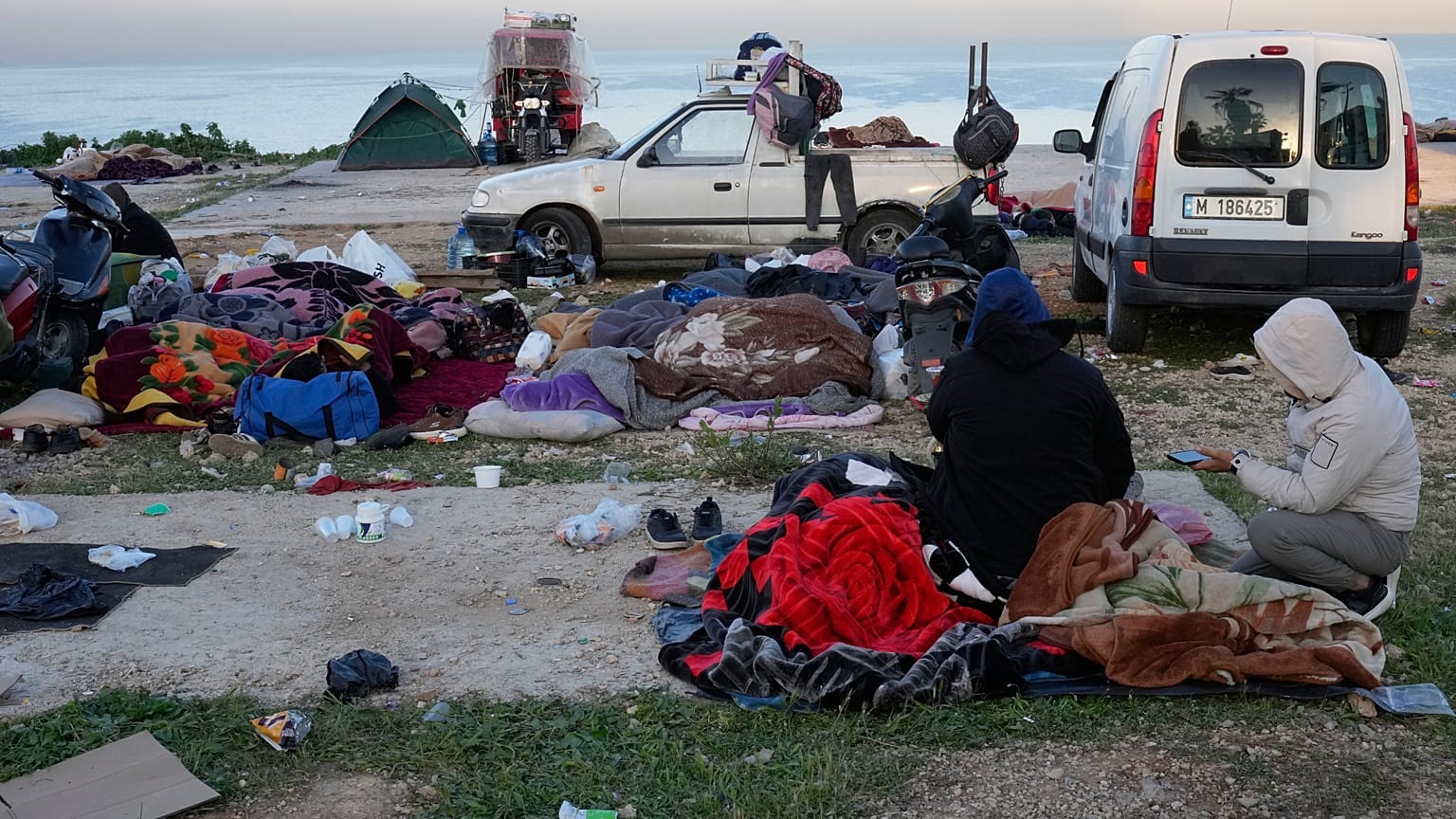
The ancient Israelites fleeing Egypt could at least escape to the Sinai desert, but civilians in Lebanon have absolutely nowhere to go and are stuck in a state that is collapsing. One million civilians, including 300,000 children, have been displaced since the Israel-Hezbollah fighting began on March 1. This crisis is taking place in a country that already had the highest number of refugees per capita in the world with a currency that has lost 98 percent of its value since 2023. Even prior to the recent Israeli bombing campaign, an estimated 4.1 million people required humanitarian assistance.
Not only is the Israel–Hezbollah fighting exacerbating a horrible humanitarian crisis, but also Israel’s plan to invade and occupy about 10 percent of Lebanon’s territory will create even more internal refugees. The invasion plan is based on overt ethnic cleansing of Shiite Muslims, who provide the base of Hezbollah’s political support. Christian and Druze villages in the south have been instructed by Israel to purge their villages of Shiites and Israel has announced that even after the fighting ends, no Shiites will be permitted to return. According to Lebanese authorities, Israel has killed 53 medical workers, destroyed 87 ambulances, forced the closure of five hospitals, demolished six bridges, and damaged two water facilities in southern Lebanon.
This is the worst Passover ever.
David, I am saddened and upset by these wars and by the way the United States has conducted itself, firstly by re-electing the President who tossed out the original plan and who is unduly influenced by certain religious people and certain diabolical leaders, and secondly because I understand how much more personal all of this is for you. I am truly sorry for that. I have some questions, but I’ll save them for a later time.
The story of ancient Israel's oppression and escape from Egypt is powerful. The call to treat strangers and aliens well is clear. It is too bad we have forgotten this lesson.